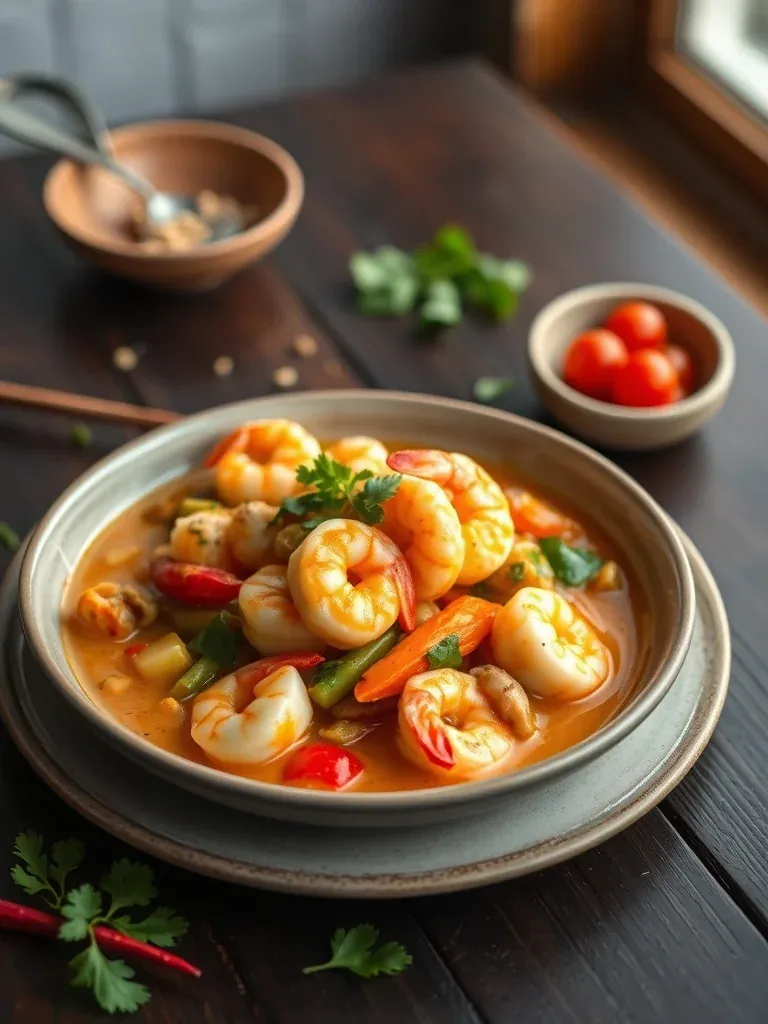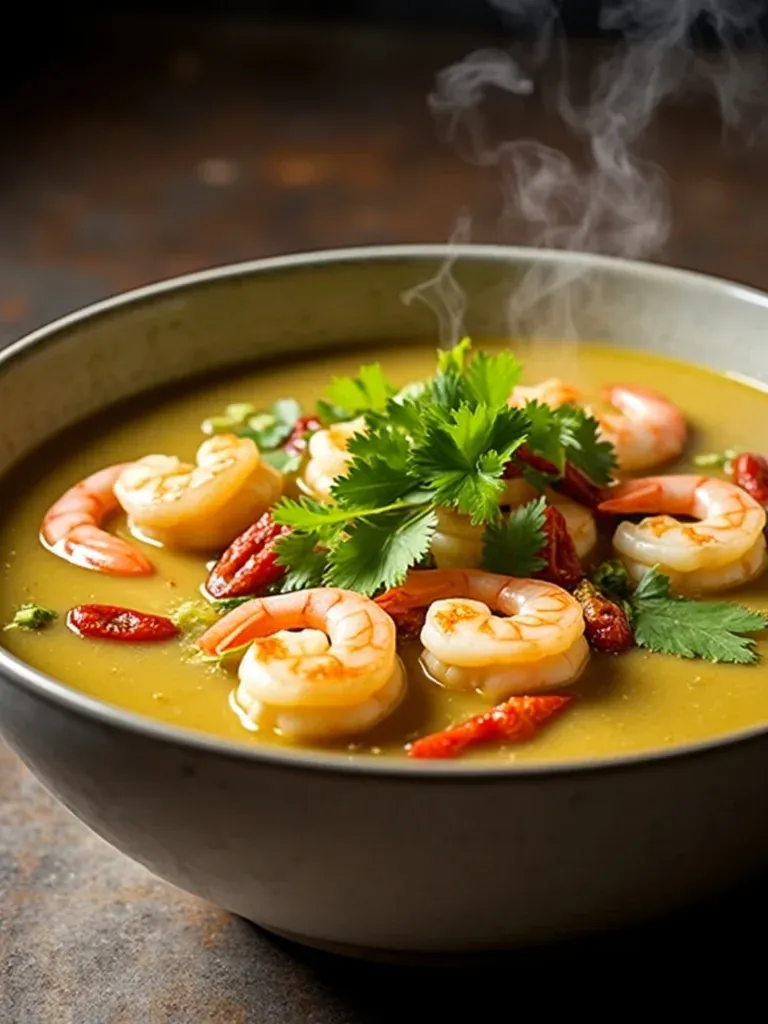
Creamy Thai Coconut Shrimp Curry
Silky coconut broth, tender shrimp, and bright Thai aromatics combine for a quick, comforting curry soup.
- Total time
- 35 min
- Servings
- 4 Servings
- Difficulty:
- Easy
Table of contents
I remember the first time I tasted a Thai curry on a rainy evening; the steam rose like warm thoughts. This creamy shrimp curry is my way of bringing that gentle rain inside, one spoonful at a time.
The essence of the dish
It’s the harmony between creamy coconut richness and the bright sting of Thai herbs, creating a comforting yet exotic experience.
A fun fact or historical angle
Thai curries historically used fermented shrimp paste for depth; today we often replace it with shrimp itself for a cleaner flavor.
Flavor or sensory focus
You’ll notice the silky mouthfeel first, then the fragrant notes of lemongrass and ginger, finally a whisper of lime that lifts everything.
You Must Know
- Never overcook the shrimp
- Balance coconut sweetness with acidity
- Taste and adjust seasoning at the end
Well, once you’ve mastered these basics, the recipe becomes a canvas for your own tweaks. Maybe you’ll add a handful of baby spinach for color, or a splash of extra coconut cream for silkier texture. The beauty is in its simplicity, allowing you to be both creator and comforter in the same bowl.
The story behind it
Originating from the coastal regions of Thailand where seafood meets coconut, this curry reflects centuries of trade and tradition. The balance of sweet, salty, and sour flavors was designed to please both the palate and the heart, making it a timeless favorite in households and street stalls alike.
Why You'll Love It
- Velvet‑smooth coconut base that coats every shrimp
- Bright aromatics that lift the whole bowl
- Ready in under 30 minutes, perfect for busy evenings
- Gentle heat lets the shrimp stay tender and juicy
Tips for success
- Don't overcook the shrimp; they turn rubbery quickly
- Let the curry paste bloom in oil for richer flavor
- Taste and adjust seasoning at the end, not midway
Professional secrets
- Use fresh coconut milk, not canned, for a silkier texture
- Bruise lemongrass rather than chopping to release oils
- Maintain a gentle simmer; a rapid boil splits the coconut fat
Common mistakes to avoid
- Overcooking shrimp, causing them to become rubbery
- Boiling the coconut milk too vigorously, which can cause separation
- Adding lime juice too early, which can dull the fresh flavor
Substitutions
- Shrimp:* Firm tofu or scallops. If using tofu, press and cube; add 2 minutes earlier.
- Fish sauce:* Soy sauce or tamari. Soy sauce adds a milder saltiness; use the same amount.
Variations
- Spicy Version:* Add sliced bird's eye chilies and a dash of extra red curry paste for a noticeable kick.
- Mediterranean Style:* Swap cilantro for fresh basil and finish with a sprinkle of toasted pine nuts.
Storage
Cool to room temperature, then refrigerate in a sealed container for up to 3 days.
Make ahead
You can prep the aromatics and measure the coconut milk up to 24 hours ahead; store them separately in the fridge.
Leftovers
Reheat gently over low heat, adding a splash of coconut milk to revive the silk.
Serving ideas
- Serve hot, ladled into deep bowls with a side of steamed jasmine rice.
- Spoon over rice noodles for a heartier meal.
- Pair with a simple cucumber salad dressed in rice vinegar.
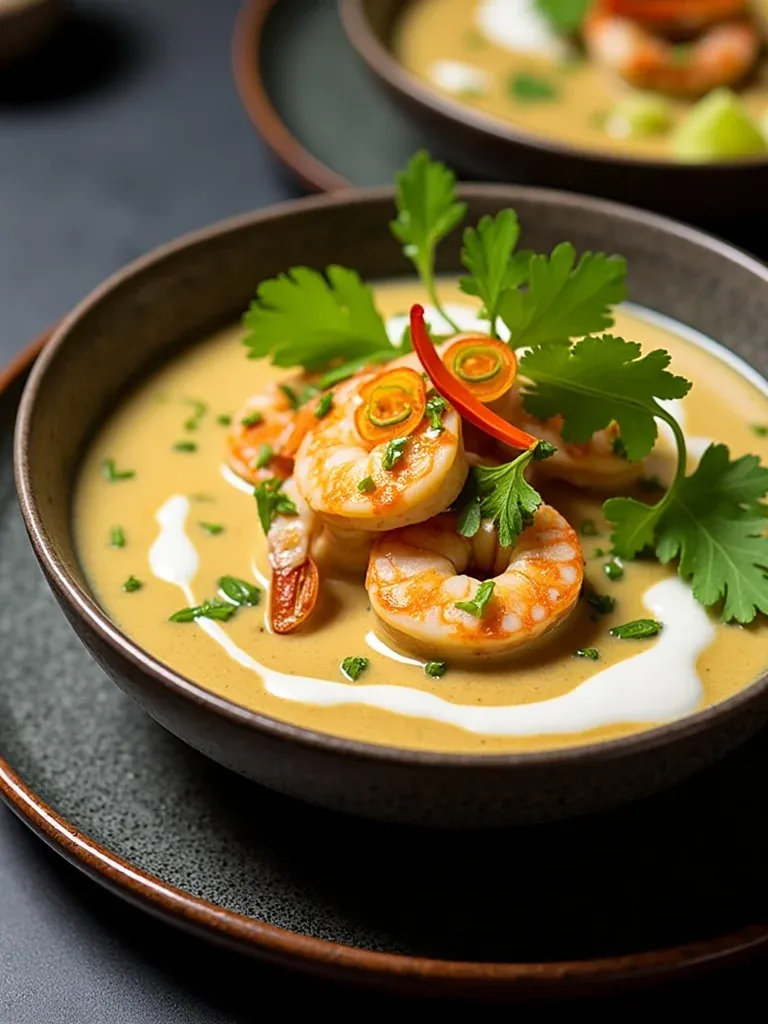
- Garnish with fresh cilantro, sliced chili, and a swirl of coconut cream.
Allergy information
Contains shellfish, coconut, and fish sauce.
Creamy Thai Coconut Shrimp Curry
Silky coconut broth, tender shrimp, and bright Thai aromatics combine for a quick, comforting curry soup.
- Prep time
- 15 min
- Cook time
- 20 min
- Total time
- 35 min
- Difficulty
- Easy
- Cuisine
- Thai
Ingredients
Main Ingredients
Optional Garnish
Instructions
- 1
Heat the oil in a large pot over medium heat; add the bruised lemongrass, ginger, and garlic, and sauté until fragrant, about 2 minutes.
- 2
Stir in the red curry paste, letting it toast gently for 1 minute to release its aroma.
- 3
Pour in the coconut milk, fish sauce, and palm sugar, stirring to combine. Bring the mixture to a gentle simmer.
- 4
Add the shrimp in a single layer, cooking just 3‑4 minutes until they turn pink and opaque; avoid overcooking.
- 5
Turn off the heat, stir in the lime juice and chopped cilantro, then let the soup rest for a minute to meld flavors.
- 6
Serve hot, garnished with sliced chili, a drizzle of coconut cream, and extra lime wedges on the side.
Nutrition per serving
- 380 kcal
- Calories
- 28 g
- Protein
- 12 g
- Carbs
- 24 g
- Fat
Tips & notes
- Taste the broth before serving; adjust salt with a pinch more fish sauce if needed. - If the soup feels too thick, thin with a splash of warm water or extra coconut milk. - For extra depth, add a small spoonful of salmon curry broth.
Frequently asked questions
Can I freeze this curry?
Yes, let it cool completely, then store in airtight containers for up to two months. Thaw gently and reheat on low, adding a splash of coconut milk if needed.
What type of shrimp works best?
Medium‑large raw shrimp, peeled and deveined, give the best balance of flavor and texture.
Can I make this vegetarian?
Swap the shrimp for firm tofu and add a tablespoon of mushroom soy sauce for umami.
How spicy is the curry?
It’s mildly spiced; feel free to increase the red curry paste or add fresh chilies for extra heat.
Do I need to use fresh lemongrass?
Fresh is ideal for aroma, but if unavailable, a teaspoon of dried lemongrass powder works in a pinch.
What side dishes pair well?
Steamed jasmine rice, crispy rice noodles, or a simple cucumber salad complement the soup beautifully.
Share:
Join our newsletter
New posts straight to your inbox. No spam, unsubscribe anytime.